If you don’t know where to start decluttering your home, the first step needs to feel small enough to actually do.
When your home feels messy or difficult to manage, it can leave you feeling stressed, frustrated and unsure where to begin. Decluttering can also feel scary because once you start, there are decisions to make about what to keep, what to let go of, and where things should go.
That is why starting with one small, easy area matters because it helps you break through that stuck feeling and see that you can make progress without pulling the whole house apart.
Why It Feels So Hard to Start Decluttering
When you look around and see clutter in every room, it is hard to know which problem to deal with first.
You may start with one cupboard, then realise the things inside belong somewhere else. But that place is full too. Then another cupboard needs sorting, another pile needs moving, and suddenly it feels like one small job has turned into the whole house.
That is why decluttering can feel overwhelming before you even begin.
It is not only the amount of stuff that makes it hard. It is the number of decisions that come with it.
Almost every item asks you to decide something. Some decisions are easy. Rubbish can go in the bin. Something that belongs in another room can be moved back. A duplicate or broken item may be simple to let go of.
But other things are not that clear. You may pick something up and wonder whether to keep it, donate it, throw it away, give it back to someone, sell it, repair it, or keep it just in case. Sometimes you feel guilty because it cost money. Sometimes it belongs to someone else. Sometimes it is connected to a hobby, a plan, or a version of your life you thought you might have.
That is why decluttering is not only about moving things around. A lot of the work is deciding what should happen next.
So if you do not know where to start, make the first decision easier. Start with something small, visible and less emotional, so you can get moving before you tackle the harder areas.
How to Choose One Small Place to Begin
When I work with a space, I usually look for the area that is causing the most daily frustration but can still be finished in one session. That gives you a small win without creating more mess.
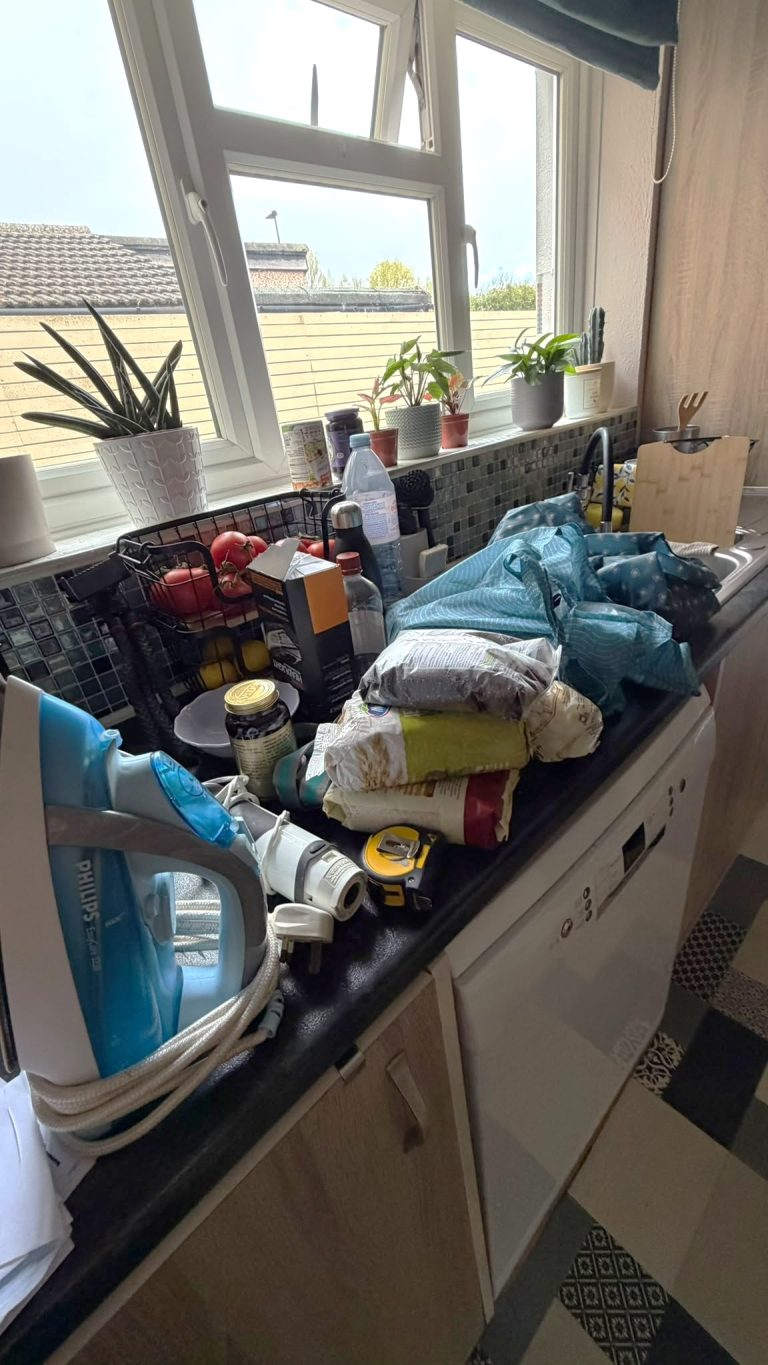
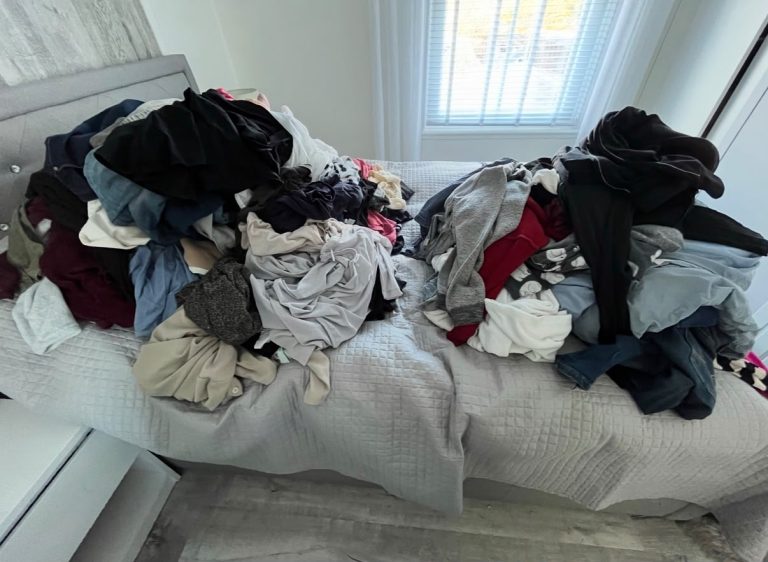
It may be the kitchen counter where things get dropped all the time, the bathroom shelf that is too full, the pile of papers you keep moving, the chair where clothes always land, or one drawer that is hard to close.
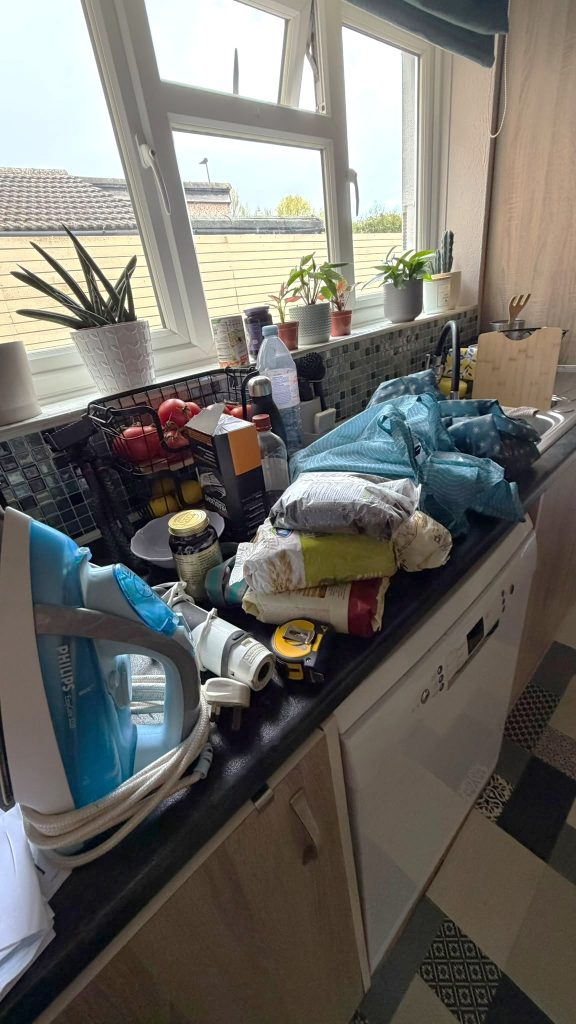
That place can be a good starting point because you notice it often. When it feels easier to manage, it can make your day feel easier straight away.
But keep it small. If you already feel stuck, don’t start with old photos, memory boxes, the loft, the garage, or anything that will bring up too many decisions.
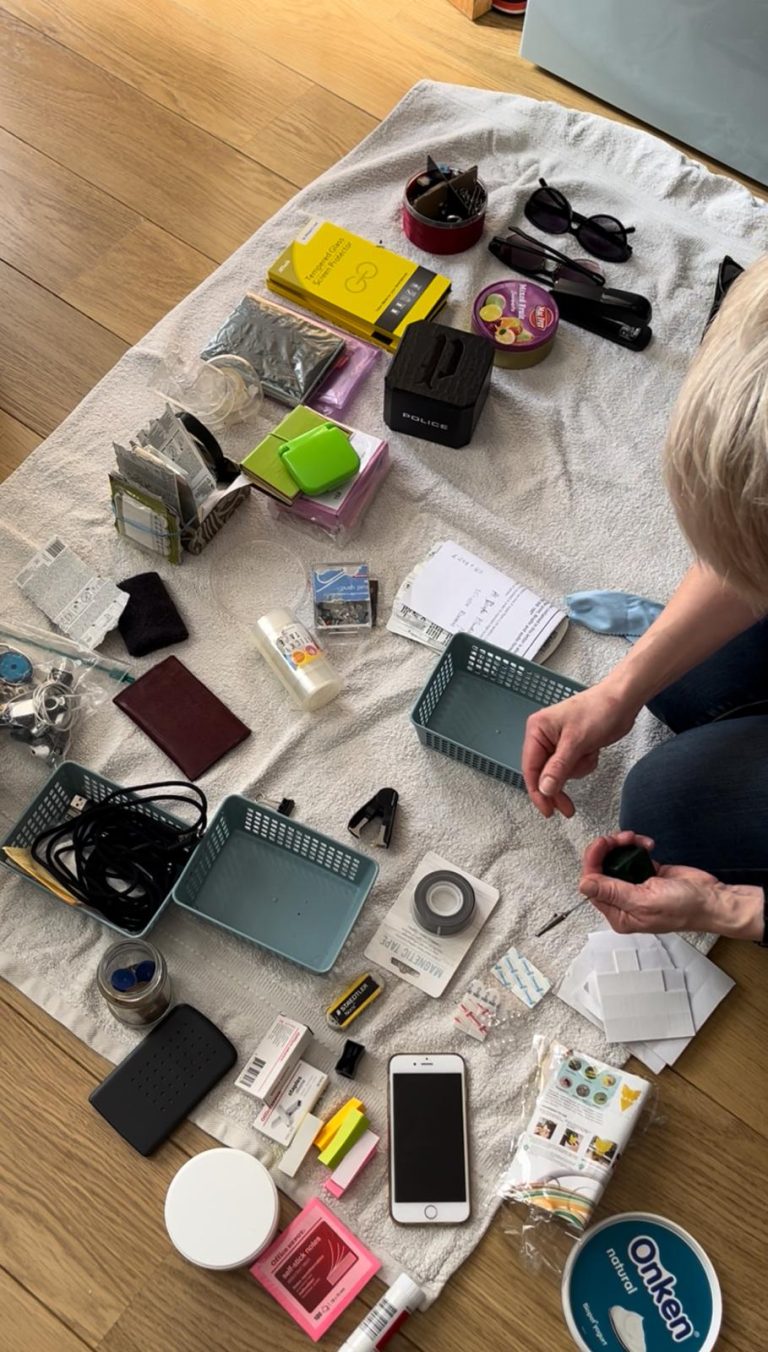
Start somewhere where most of the decisions are simple. Things that are rubbish, broken, out of date, in the wrong room, duplicated, or no longer used.
You are not trying to sort the whole house right now. First, you just need to choose where to start in a way that makes it easier for yourself: fewer decisions, something small enough to finish, and no bigger mess left behind.
Decluttering does not work better because you start big. It works better when the first step is small enough that you can finish it and carry on.
Mistakes That Make Decluttering Harder to Start
Once you have chosen one small place to begin, it is tempting to rush in and try to sort everything properly straight away.
But this is where decluttering can quickly become harder than it needs to be.
One common mistake is pulling too much out at once. It may feel like the “proper” way to declutter, but if you empty a whole cupboard, wardrobe or room when you are already overwhelmed, you can end up surrounded by piles and not know what to do next.
Another mistake is trying to organise before you have removed anything. Storage boxes, baskets and labels can be useful later, but they do not solve the problem if there is simply too much in the space. If you buy storage too early, you may just make it easier to keep things you do not need anymore.
It is also easy to start with the hardest things: sentimental items, expensive things, hobby supplies, children’s artwork, gifts, old photos or things you feel guilty about. Those decisions take more energy, so they are not usually the best place to begin.
At the start, you want to make decluttering easier for yourself, not harder.
So before you reorganise, buy storage or pull everything out, look for the easiest layer first: rubbish, broken things, duplicates, things that are out of date, things in the wrong room, or things you already know you do not use.
That gives you a way in without turning one small area into a bigger mess.
Start With the Easy Layer
Once you have chosen one small place to begin, don’t try to make every decision at once.
Start with the easy layer first.
That means looking for the things that do not need a lot of thinking. Rubbish, broken items, empty packaging, things that are out of date, duplicates, things that belong in another room, or things you already know you do not use.
This is not the time to decide about old photos, sentimental gifts, expensive items you regret buying, or things you feel guilty about. Those decisions can wait.
For example, if you start with a bathroom shelf, the easy layer might be empty bottles, expired products, old razors, makeup you know you will not use, or things that have somehow ended up there but belong somewhere else.
If you start with a kitchen drawer, it might be broken utensils, duplicate tools, takeaway menus, random lids, elastic bands, old batteries or small things you never reach for.
The easy layer matters because it gives you a way in. You are not trying to sort the whole space perfectly. You are just removing the obvious things first, so the area feels less heavy to deal with.
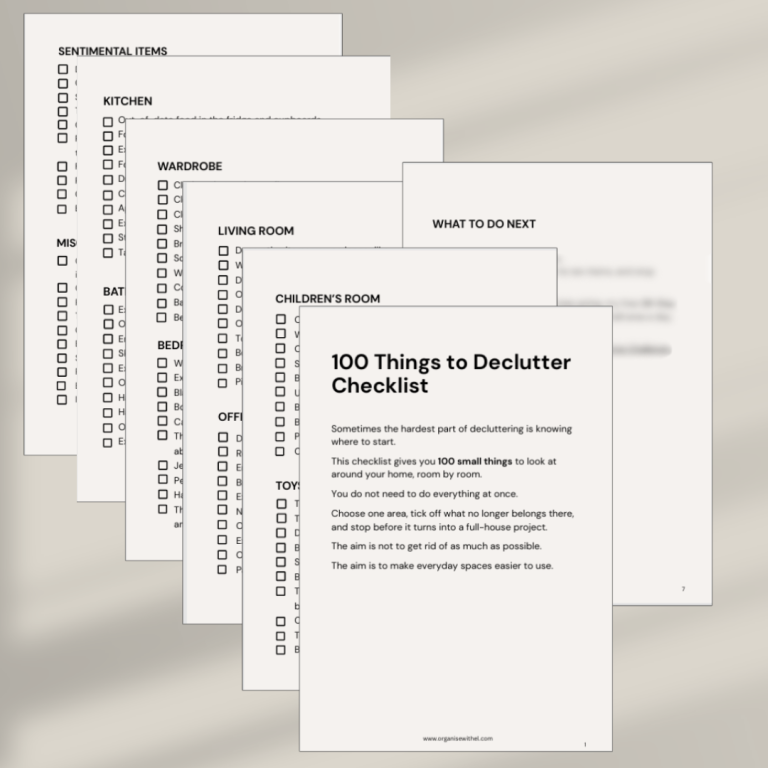
If you want ideas for simple things to start with, my room-by-room list of 100 Things to Declutter Right Now can help.
What to Do When You Pick Something Up
Once you have removed the easy things, you may be left with items that are not so obvious.
This is where decluttering can slow down.
You pick something up and you are not sure whether to keep it, move it, donate it, sell it, return it, repair it or ask someone else. If you are not careful, those things can quickly become another pile on the floor, the table or the stairs.
So instead of creating a “decide later” pile for everything, ask one simple question:
What needs to happen to this next?
Some things are easy. If it already has a home, put it back. If it is rubbish or recycling, take it out straight away. If it belongs in another room, put it in that room rather than leaving it in a new pile.
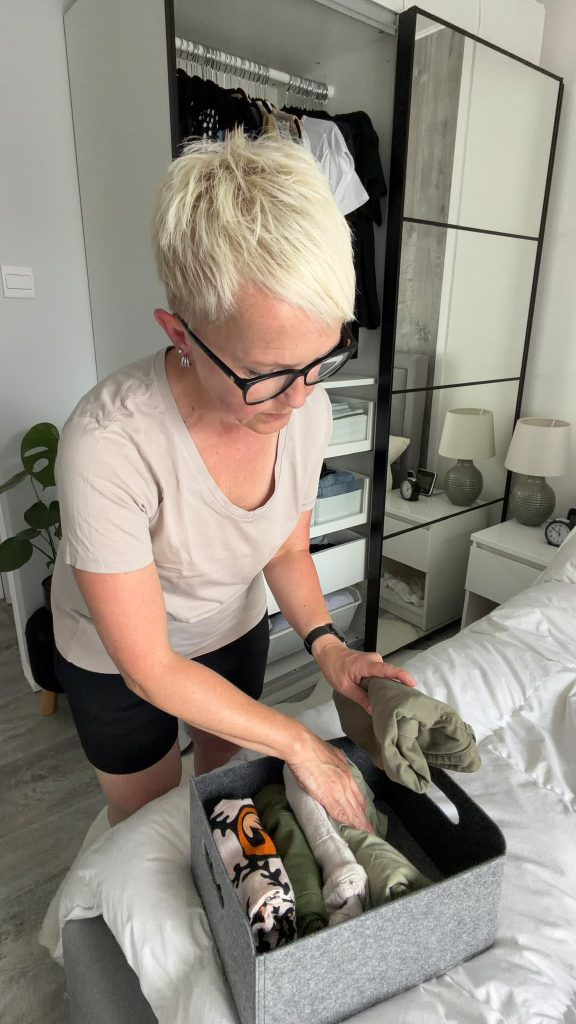
For the things you are not sure about, try to be more specific. Is it something you need to return? Something you need to ask someone about? Something you need to repair? Something you might donate, but you are not fully ready yet?
Give those things one temporary place, not five different piles around the house.
That might be one bag for donations, one place for returns, and one small box for things you genuinely need to think about later.
The important part is to keep the area moving. If everything goes into a “maybe” pile, you have not really made the space easier. You have just moved the decisions somewhere else.
You do not need to decide everything perfectly, but you do need to give each item a clear next step. That is what stops decluttering from turning into more mess.
Stop Before You Make a Bigger Mess
One of the easiest ways to make decluttering harder is to keep going for too long.
You start with one drawer, then move to another cupboard, then notice something else, and suddenly you have things all over the floor. At that point, it is much harder to finish because you are tired, the room looks worse, and every item still needs a decision.
Try to stop while the area is still manageable.
If you chose one drawer, finish that drawer. If you chose one bathroom shelf, finish that shelf. If you chose one pile of papers, deal with that pile and leave the rest for another day.
Before you stop, do the small finishing jobs as well. Put rubbish and recycling out. Put donations in one bag. Move things back to the rooms they belong in. Keep anything that needs action in one clear place, not spread around the house.
This is what makes decluttering feel more successful. Not doing a huge amount, but finishing the small area properly.
You should be able to walk away and feel that the space is easier than it was before, not that you have created another job for later.
When You Need a Clear Next Step
Sometimes even choosing one small area feels like too much.
You might understand that you need to start small, but still look around and think, yes, but which drawer, which pile, which room, which thing first?
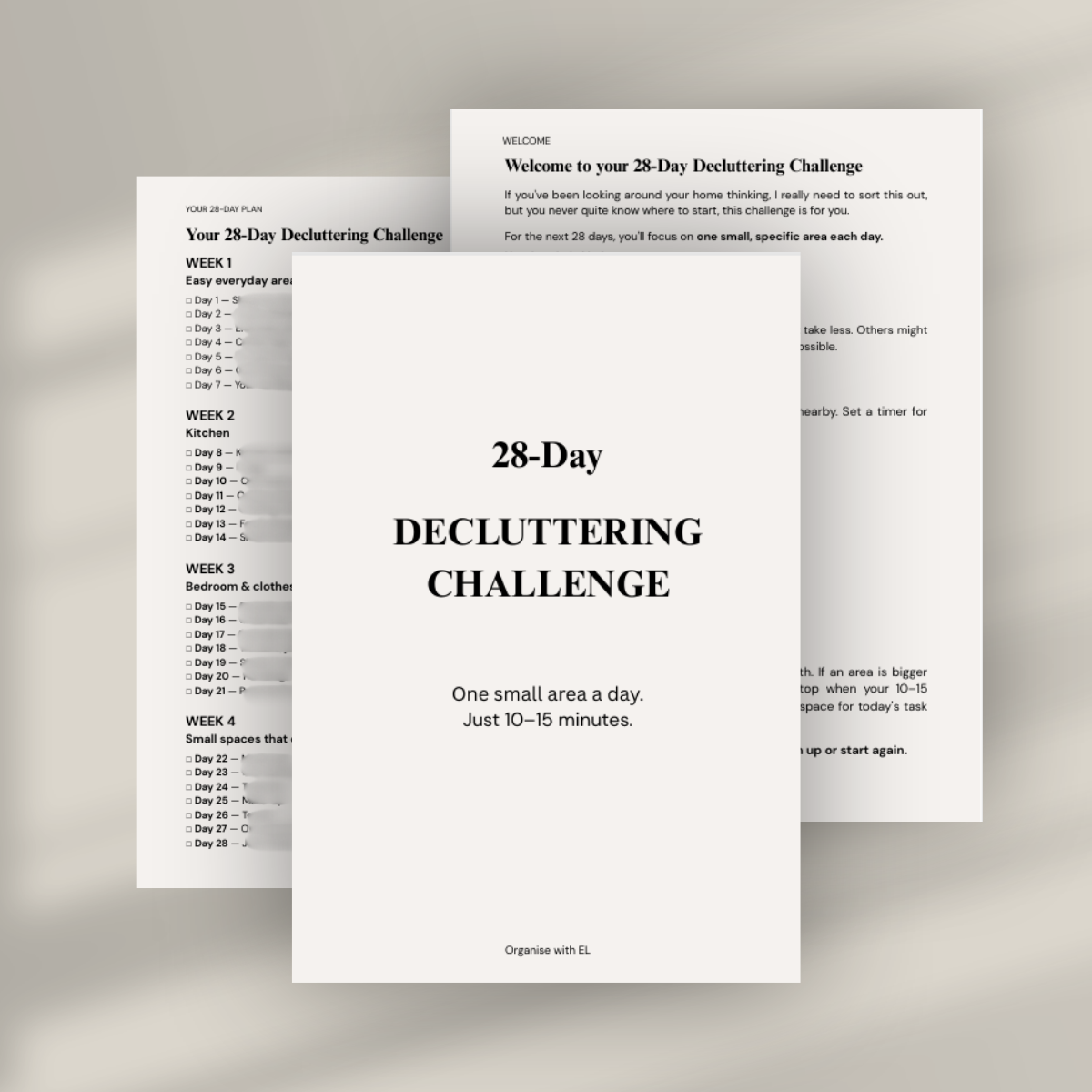
This is where the 28-Day Decluttering Challenge can help. Each day gives you one small area to focus on, in around 10–15 minutes, so you can just follow the next step instead of working it all out yourself.
Start with one small area a day
My free 28-Day Decluttering Challenge gives you one small area to focus on each day, in around 10–15 minutes.
You do not need to plan your whole house or decide everything before you begin. You also do not need to follow it perfectly or finish every task.
Use it in the way that helps you most right now – follow it day by day, choose the tasks that fit your home, or come back to it when you need a clear place to start.
FAQs
Start with one small area that annoys you often, but does not involve too many difficult decisions. A bathroom shelf, one kitchen drawer, a pile of papers or one small section of your wardrobe can be easier than starting with a whole room.
Try not to start with old photos, memory boxes, sentimental gifts, the loft, the garage or anything that will take hours. These areas can bring up too many decisions and make it harder to keep going.
Keep the first area small enough to finish. Before you stop, put rubbish and recycling out, put donations in one bag, return things to the rooms they belong in, and keep anything that needs action in one clear place.
Related Articles
100 Things to Declutter Right Now: Room-by-Room Checklist
If you want ideas for simple things to start with, this list gives you small decluttering ideas split by room.
How to Declutter When You Have Too Much Stuff
For when your home feels too full and you don’t know how to make progress without pulling everything apart.
Why Do I Struggle to Keep My House Tidy?
For when the same areas keep getting messy again, even after you have already tidied them.
Meet Ela
Hi, I’m Ela, the home organiser behind Organise with EL.
I help busy women create homes that are easier to manage in everyday life.
I’ve found that clutter usually isn’t just about having too much stuff. Often, it builds up because everyday spaces stop working for the way you actually use them.
That’s why I help women look at what’s really causing the problem and make changes that are easier to maintain.