When you have too much stuff and things are everywhere, decluttering isn’t just about tidying up or finding somewhere else to put everything.
You need to look at what you have, decide what you actually use and want to keep, and work out how much your available space can comfortably hold. The aim is to make room for the things you need without constantly moving belongings from one place to another.
Perhaps your kitchen cupboards are already full, but you’ve still got things covering the countertops. Or your wardrobe is packed, yet clothes keep piling up on a chair because there’s nowhere to put them. In this guide, I’ll show you how to work through those belongings, make decisions about what stays, and gradually get your space back.
Why Your Home Still Feels Full Even After You’ve Tidied
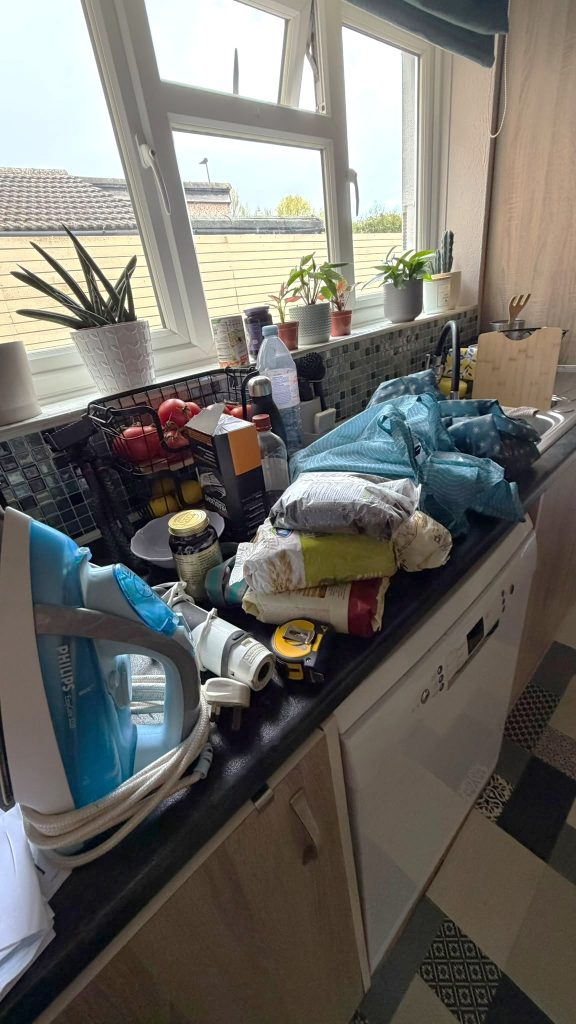
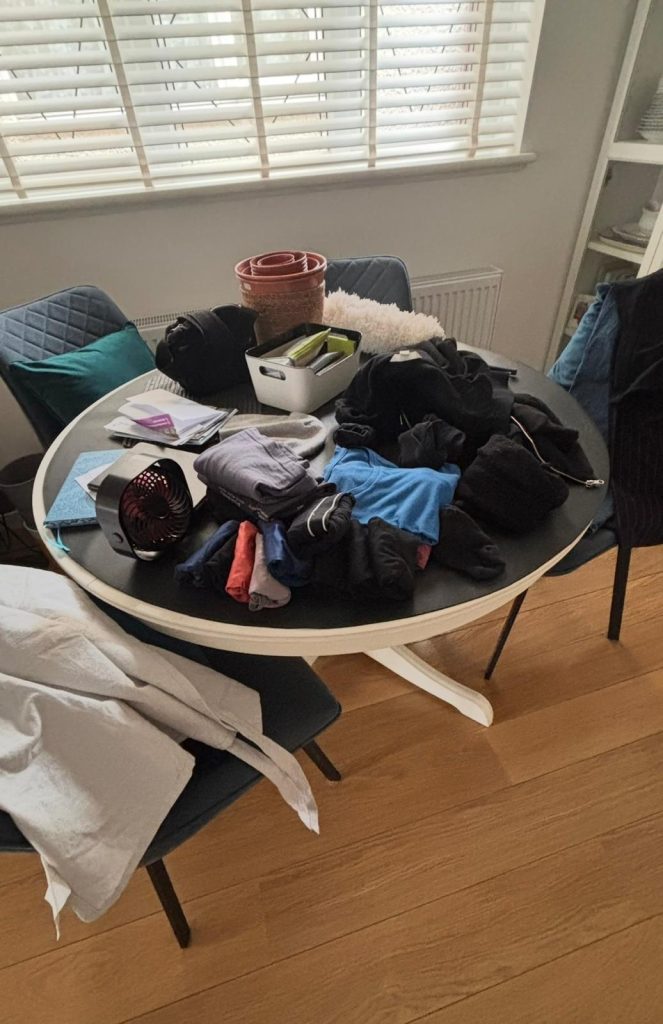
You might spend time clearing your dining table, kitchen countertops or bedroom floor, but where does everything go? If your cupboards and drawers are already packed, you end up squeezing things in, stacking them on top of each other or moving them somewhere else. Before long, those surfaces are covered again.
The problem is that tidying doesn’t actually reduce the amount of stuff you own. You might have kitchen equipment you rarely use taking up valuable cupboard space, several sets of bedding squeezed into one drawer, or clothes that no longer fit mixed in with everything you wear regularly. All those things take up space, leaving less room for what you actually need.
And when storage is full, it’s easy to lose track of what you already have. You might buy another item because you can’t find the original, only to discover later that you’ve already got two or three of them.
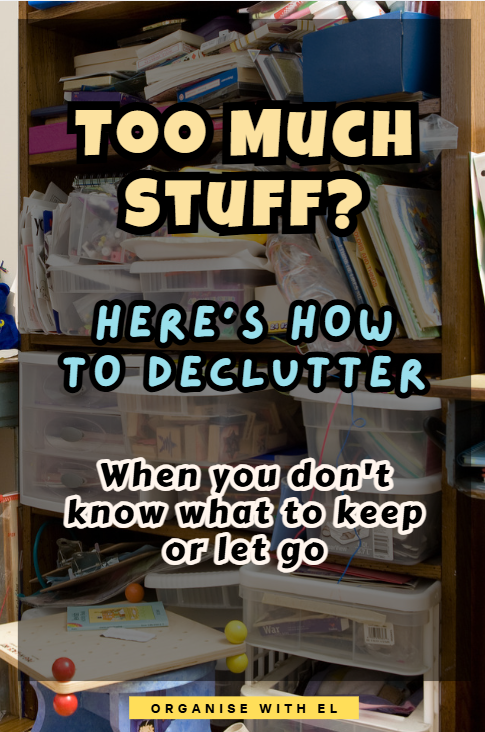
That’s why, when your home is full of belongings, it’s worth looking beyond the things you can see lying around. You also need to consider what’s filling the cupboards, drawers and storage spaces.
How to Declutter When Your Things Are Everywhere
When your home is full of stuff, you might find that the same type of belongings are stored in several different places. You’ve got cleaning products under the kitchen sink, more in the bathroom cupboard and a few bottles in the utility room. Or perhaps you’ve got towels in the airing cupboard, bedroom drawers and a storage box because they don’t all fit in one place.
The trouble is, when things are spread around like this, it’s difficult to know how much you actually own. You might think you need more storage when you’ve already got several of the same items tucked away in different places.
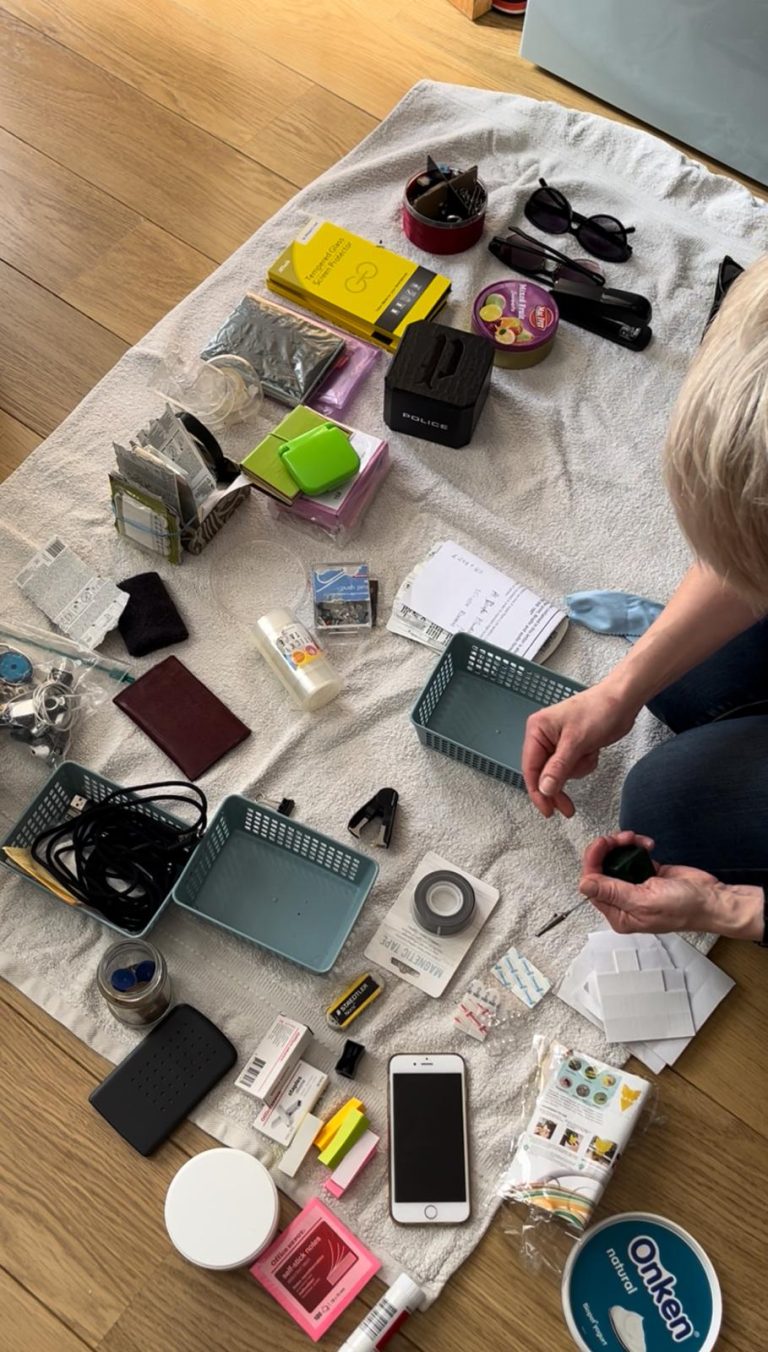
Rather than emptying every cupboard and drawer, choose one type of belonging and look at how much you have altogether. For example, if you’ve got too many mugs, check the kitchen cupboards, shelves and anywhere else you might be keeping extras. Bring them together somewhere you can see them properly.
You might discover you’ve got far more than you realised, including things you’d forgotten about because they were stored out of sight. Seeing everything together makes it easier to compare what you have instead of making decisions about individual items in different cupboards.
If you’ve got a particularly large amount of something, you don’t have to pull it all out at once. You could work through your clothes by type, such as jeans or sweaters, rather than emptying the entire wardrobe and every storage box in the bedroom.
The idea is to get a clearer picture of what you’re dealing with, without covering your home in even more stuff. Once you can see how much you have, you’re in a much better position to decide what you actually need to keep.
If you’re finding it difficult to decide where to begin, my article on How to Start Decluttering Your Home When You Don’t Know Where to Start will help you choose a manageable starting point.
How to Decide What to Keep When You Have More Than You Can Store
When you’ve got more belongings than you have room for, deciding what to keep can be difficult, especially when there’s nothing particularly wrong with the things you own. You might have plenty of items that are still in good condition, but that doesn’t necessarily mean you need to keep all of them.
Start by thinking about which things you use regularly and which ones you genuinely need, even if you don’t use them very often. For example, you might only use your large roasting dish at Christmas, but if you cook for the whole family every year, there’s a good reason to keep it. On the other hand, you might have several smaller dishes that do almost the same job, and you always reach for the same two.
It’s also worth looking at how many of something you actually need. Perhaps you’ve got enough bed sheets for several households, even though you only use a few sets regularly. You don’t have to get rid of all your spares, but think about how many would realistically be useful for your family. The same applies to kitchen utensils, shoes, bags and other belongings that tend to build up over time.
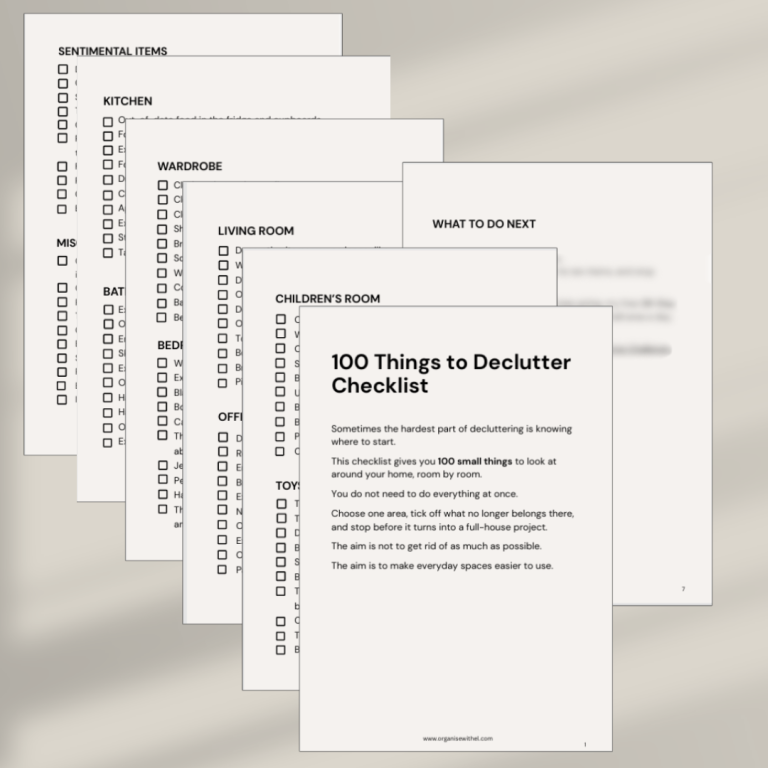
If you’re not sure what you could get rid of, have a look at my 100 Things to Declutter Right Now. It includes everyday things you might have more of than you actually need.
Some decisions will be harder because you’ve spent money on something or think you might need it one day. Before deciding to keep it, consider what you would actually use it for and how likely that is to happen. There’s a difference between keeping something for a particular purpose and holding on to it indefinitely because it might come in handy.
And you don’t have to make every decision immediately. If you’re unsure about something, give yourself a little time to think rather than getting rid of it just to create space. You don’t want to regret letting go of something you genuinely needed.
The aim isn’t to own as little as possible. It’s to make room for the belongings that are useful and important to you, rather than keeping everything simply because there’s nothing wrong with it.
What If You Still Have More Stuff Than Space?
Even after you’ve gone through your belongings and decided what to keep, you might find that your cupboards and drawers are still too full. This is particularly difficult if you live in a smaller home, have a large family or simply don’t have much built-in storage.
At this point, it’s worth looking at how you’re using the space throughout your home. For example, you might have a kitchen cupboard full of appliances you only use occasionally, while the things you reach for every day are squeezed onto the countertops. Could some of those less frequently used appliances be stored somewhere else, leaving the kitchen cupboard for the things you use regularly?
You might also have storage space you’re not making much use of, such as the area under your bed or the higher shelves in a wardrobe. These could be useful for things you need to keep but don’t use every day, such as seasonal clothes or spare bedding. Just make sure they’re suitable for what you’re storing and that you can still get to those belongings when you need them.
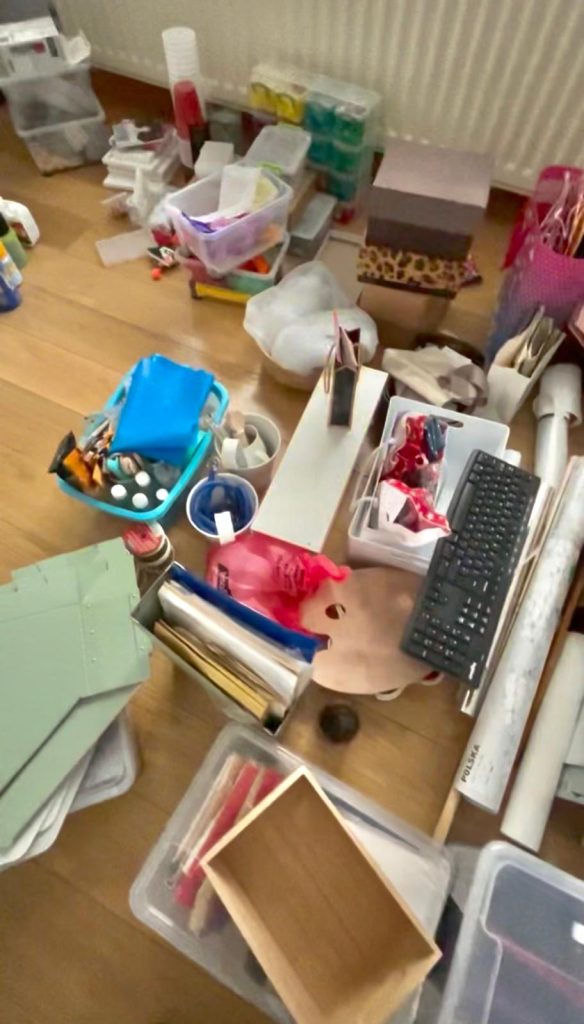
But sometimes there simply isn’t enough space, even when you’re using it well. Perhaps you’ve got several hobbies that require equipment, or your children have outgrown their bedrooms but still need somewhere for their belongings. In situations like these, you may need to decide which activities and belongings need the most space and where you’re willing to make compromises.
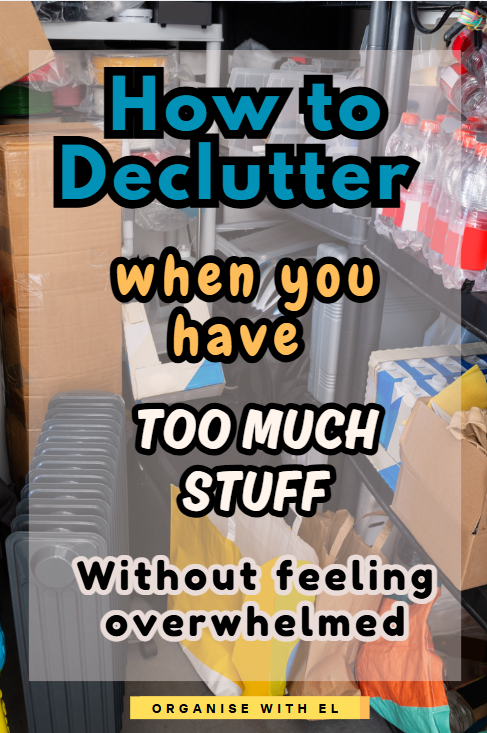
Buying another storage unit might help if you’ve genuinely got room for it, but it’s worth thinking about what you’re going to put inside before spending money. Otherwise, you could end up with another cupboard that’s just as full as the others.
You can’t always make your home bigger, but you can be more thoughtful about how you use the space you’ve got. The important thing is finding a balance between the belongings you want to keep and having enough room to live comfortably.
Give the Things You’re Keeping Somewhere Practical to Go
Once you’ve made some room, think about how you’re going to arrange the belongings you’ve decided to keep. It’s tempting to put everything back wherever it fits, but that can make everyday life difficult, especially if you have to move several things just to get to something you need.
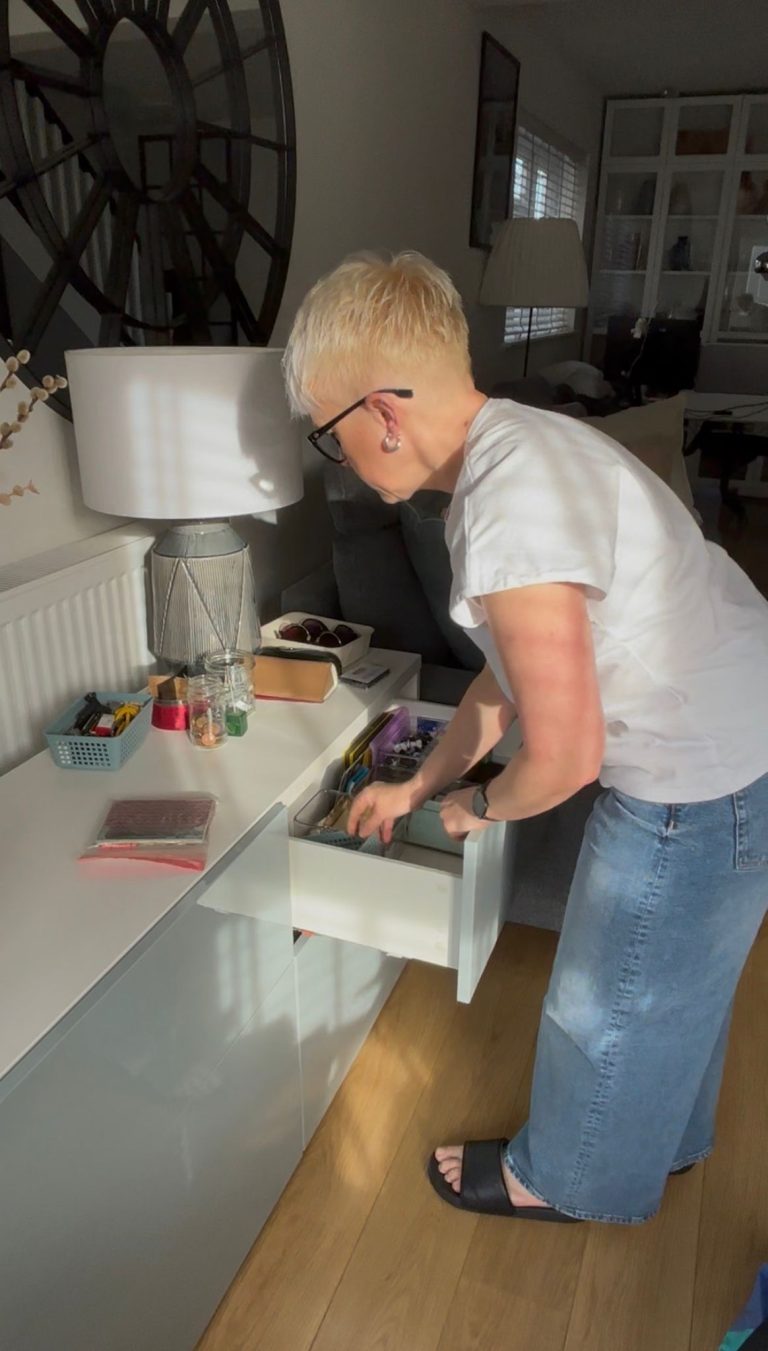
For example, you might have cleared out a kitchen cupboard, but if your everyday plates are still stacked underneath serving dishes and mixing bowls, you’ll be moving things around every time you need them. It makes more sense to arrange the cupboard around how you actually use it, rather than trying to fit everything in neatly.
The same applies to clothes, paperwork, children’s belongings and other things around your home. Think about where you normally use them and whether everyone in the household can easily find what they need. If your children have to ask you where something is every time they want it, perhaps it needs a more convenient place.
It’s also worth paying attention to how easily you can put things back. A storage system might look lovely when you’ve just organized it, but if you have to lift several boxes, open different containers or rearrange a shelf every time, you’re less likely to keep using it.
You don’t need matching containers or perfectly arranged cupboards. What matters is that the belongings you’ve decided to keep have somewhere practical to go, without making everyday tasks more complicated.

Don’t Let Unwanted Things Become Another Pile
You’ve spent time going through your belongings and deciding what you no longer want to keep. But if those things are still sitting in bags behind the bedroom door, piled up in the hallway or filling the garage, they’re still taking up space in your home.
One thing that can help is deciding what will happen to unwanted items as you’re sorting through them. Have somewhere for things you’re going to donate, sell, recycle or throw away, so you’re not left with one big pile to deal with later.
If you’re planning to donate something, think about where you can take it and when you’ll realistically be able to drop it off. You might even be able to arrange a collection. There’s no point filling your car with donation bags if they’re going to sit there for the next three months.
Selling things can take a little more effort. You need to photograph them, list them, answer messages and sometimes arrange collection or postage. Before putting something aside to sell, consider whether it’s worth your time. If you’ve had something listed for months without any interest, perhaps it’s time to reduce the price or consider donating it instead.
And not everything needs to be donated or sold. Some belongings are too worn or damaged to be useful to someone else. Check whether they can be recycled locally, and dispose of anything that can’t be reused or recycled responsibly.
Try to make getting unwanted belongings out of your home part of the decluttering process, rather than another job you’ll get around to eventually. Even if you can’t remove everything on the same day, having a realistic plan for where it’s going and when it will leave can make a big difference.
When You’ve Got a Lot to Declutter
When your cupboards, drawers and other storage spaces are already full, you know there’s plenty to sort through. But dealing with everything in your home is going to take time.
You don’t have to do it all in one weekend. Working through different areas regularly can help you reduce the amount of stuff you have without turning your whole house upside down.
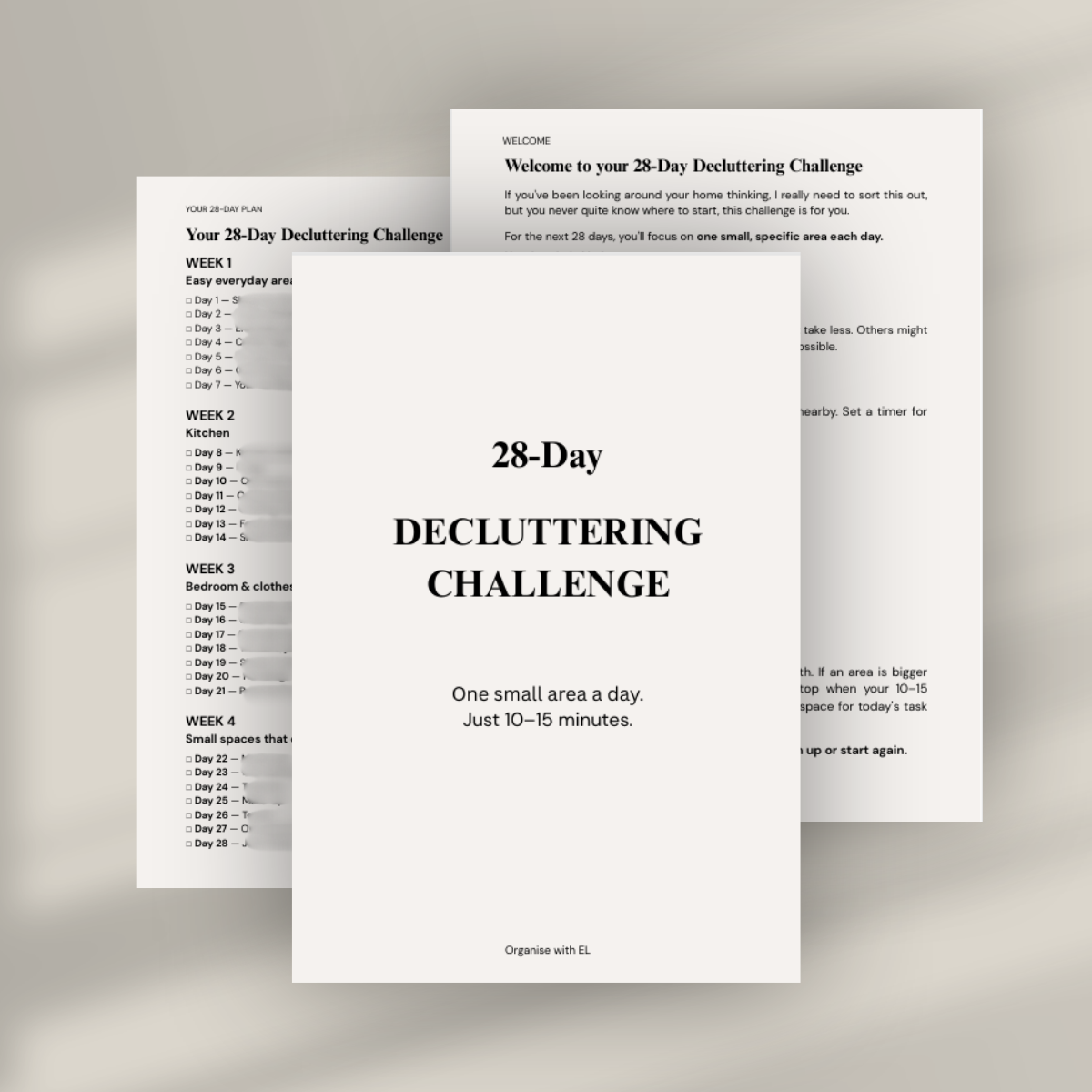
Start with one small area a day
My free 28-Day Decluttering Challenge gives you one small area to focus on each day, in around 10–15 minutes.
You can work through different parts of your home, get rid of things you no longer need and gradually make more room for the belongings you want to keep.
You don’t have to follow it perfectly or complete every task on the same day. Use it at your own pace and come back to it whenever you have time.
FAQs
If you live with your partner, children or other family members, you might find that a lot of the belongings taking up space aren’t actually yours. And while you may be ready to declutter, they might not feel the same way.
Start with your own belongings and the things you’re responsible for. When it comes to shared spaces, talk about what’s making those areas difficult to use and what needs to change. For example, if the hallway is full of everyone’s shoes and coats, you might need to agree on how much each person can keep there.
Try not to get rid of other people’s belongings without asking them. You’re more likely to make progress if everyone has a say in what happens to their things.
Sentimental belongings can be particularly difficult because their value isn’t always about how useful they are. You might have boxes of your children’s schoolwork, things you’ve inherited or gifts from people who are important to you.
You don’t have to keep every item to hold on to those memories. You might choose a few things that mean the most to you, rather than keeping an entire collection. For example, you could keep a selection of your children’s drawings instead of every piece of schoolwork they’ve ever brought home.
And if you’re not ready to make a decision about something, that’s fine. You can come back to it another time rather than getting rid of something you might regret.
Related Articles
100 Things to Declutter Right Now: Room-by-Room Checklist
If you’ve got so much stuff that you’re not sure what you could get rid of, this list gives you 100 everyday items to look through around your home. You might find things you’ve been keeping without really needing them.
How to Start Decluttering Your Home When You Don’t Know Where to Start
If you’ve got a lot to declutter but you’re struggling to decide where to begin, this article will help you choose a starting point and avoid turning the job into something even bigger.
Meet Ela
Hi, I’m Ela, the home organiser behind Organise with EL.
I help busy women create homes that are easier to manage in everyday life.
I’ve found that clutter usually isn’t just about having too much stuff. Often, it builds up because everyday spaces stop working for the way you actually use them.
That’s why I help women look at what’s really causing the problem and make changes that are easier to maintain.