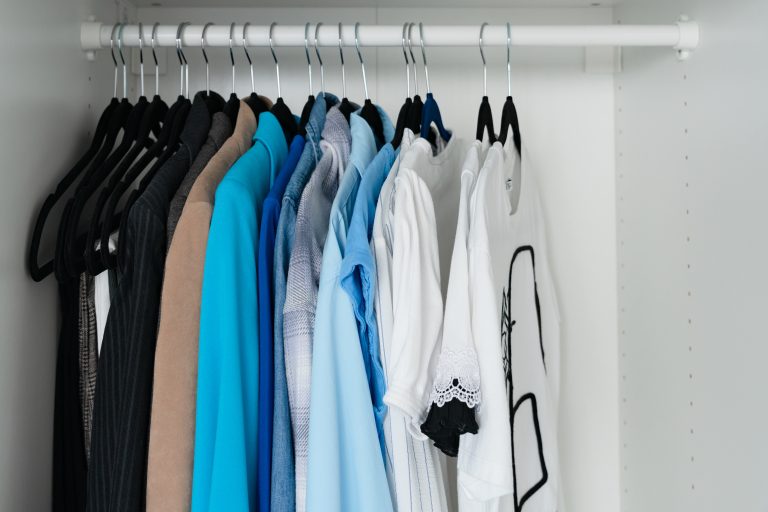
If you’re wondering how to organize a small closet with lots of clothes so it actually stays organized, the problem is often bigger than finding more storage.
Maybe you’ve folded everything neatly, bought slim hangers or storage boxes, or spent an afternoon reorganizing the shelves.
It feels better. For a little while.
Then, slowly, the closet becomes difficult to use again.
Hangers become crammed together. Folded clothes start collapsing. Clothes you’ve worn once end up on a chair. You struggle to find what you want, even though the closet is full. Every morning, you move things out of the way just to get dressed.
That’s usually the point where people assume they simply own too many clothes or need a bigger closet.
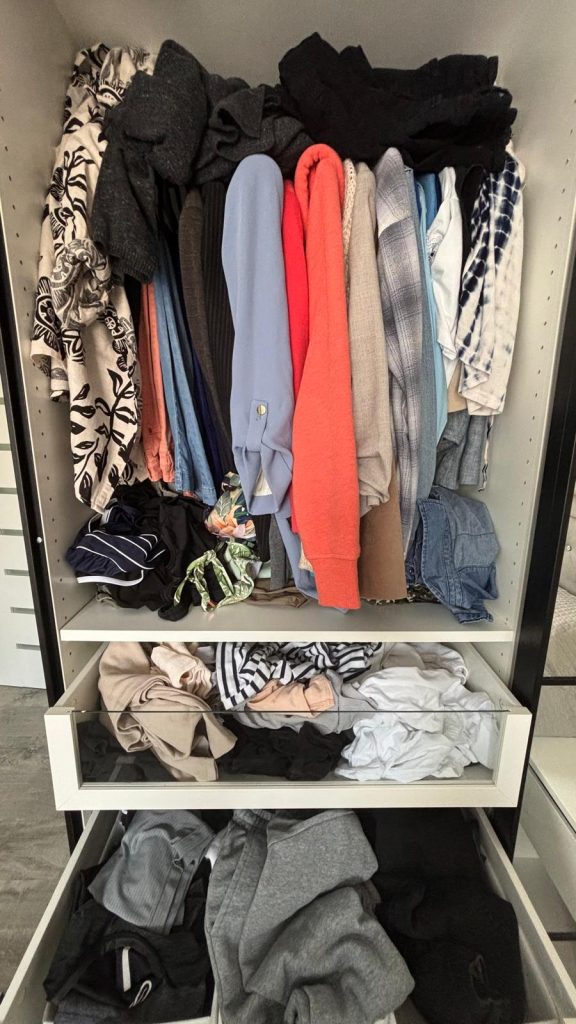
Sometimes the problem really is that the closet is holding more clothes than it comfortably can.
But even then, that’s usually only part of the reason it feels so difficult to keep organized.
Very often, a small closet becomes difficult because it’s trying to do much more than simply store the clothes you wear.
It’s also holding clothes you’re unsure about, clothes you’ve worn once, clothes for another season, clothes that no longer fit, clothes waiting to be repaired and clothes you’re keeping ‘just in case’.
When all of those different stages of clothing compete for the same small space, the closet becomes harder and harder to keep organized.
The good news is that organizing a small closet isn’t only about fitting more into it. It’s about understanding why it keeps becoming difficult to use in the first place. Once you recognise what’s really happening, it becomes much easier to create a closet that works in everyday life, not just on the day you’ve organized it.
Why a Small Closet Stops Working
When people think about how to organize a small closet with lots of clothes, they often assume the biggest problem is space.
Sometimes it is.
But many small closets become difficult to use because they’re trying to do too many different jobs at once.
Your everyday clothes, clothes you’re unsure about, clothes you’ve worn once and seasonal items all end up competing for the same space.
Before looking at how to organize a small closet, it helps to understand why it stopped working in the first place.
Your Closet Has Become Storage Instead of a Dressing Tool
A closet should make getting dressed easier.
When it’s working well, you open the door, see the clothes you wear most often and quickly choose what you need.
But over time, many small closets slowly stop doing that.
Instead of helping you get dressed, they become storage for every clothing decision that hasn’t been finished yet.
The sweater you’re not sure about.
The jeans you hope will fit again.
The dress you might wear one day.
The jacket that needs repairing.
The top you bought because it was on sale but still hasn’t been worn.
Those clothes aren’t necessarily a problem on their own.
The problem is that they’re sharing the same space as the clothes you rely on every week.
Every morning, your everyday clothes have to compete with clothes you rarely wear, clothes you’re unsure about and clothes you’re keeping “just in case.”
That means getting dressed becomes harder than it needs to be.
Instead of simply choosing an outfit, you’re surrounded by old decisions every time you open the closet.
Do I still like this?
Should I keep it?
Will I wear it?
Maybe next season.
Or when I lose weight.
One day.
Those questions take up just as much space mentally as the clothes do physically.
That’s why organizing a small closet isn’t only about making more room.
It’s about making sure your favorite, everyday clothes are no longer competing with everything else you’ve decided to keep for another day.
Your Closet Is Full of Decisions You’ve Postponed
Not every item in your closet is there because you’ve decided to keep it.
Sometimes it’s there because you haven’t decided what to do with it yet.
You try on a top before going out.
It doesn’t feel quite right.
Instead of deciding whether it’s time to let it go, you hang it back in the closet.
A sweater looked great in the shop, but you’ve never actually worn it.
The tag is still attached months later.
It stays in the closet because deciding what to do with it can wait until another day.
Your favorite jeans don’t fit as comfortably as they used to.
You tell yourself you’ll try them on again in a few months, so they stay exactly where they are.
None of those decisions feel urgent.
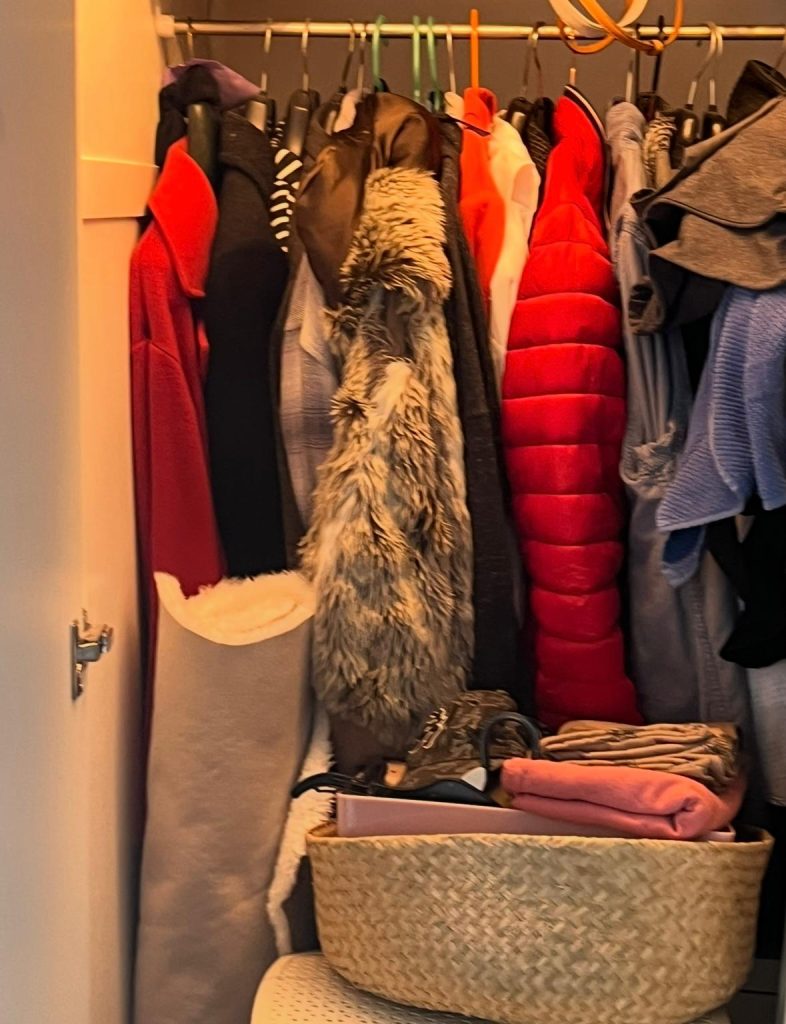
So the clothes go back into the closet, ready for you to make the same decision another day.
The problem is that postponing a decision doesn’t make it disappear.
It simply means your future self has to make it instead.
Over time, those postponed decisions quietly take up more and more of your closet.
Space that could be used by the clothes you wear every week is filled with clothes you’re still thinking about.
That’s one of the reasons a small closet can feel full, even when many of the clothes inside aren’t part of your everyday life.
Clothes in Transition Need a Home
What do you do with clothes you’ve worn once?
Not dirty enough to wash.
Not quite ready to put back with your freshly washed clothes.
For many people, that’s where the problem starts.
A sweater you’ve only worn for a couple of hours.
Jeans you’re planning to wear again tomorrow.
A jacket you only put on for the school run.
Those clothes don’t quite fit into either category, so they often end up somewhere nearby.
Over the back of a chair.
Folded at the end of the bed.
Hanging on a door.
Left on the treadmill.
The same thing can happen with clean laundry, but for a different reason.
It gets washed.
It gets dried.
Then it stays in the basket.
Not because it doesn’t belong in the closet, but because putting it away feels like another job.
When your closet is already full, hangers are squeezed together and drawers are overflowing, putting clothes away takes more effort than it should.
So it gets left until later.
Over time, those small delays become part of the routine.
The chair becomes a temporary closet.
The laundry basket becomes a temporary dresser.
And before long, your clothes are spread across several places instead of one.
A closet doesn’t just need room for the clothes you own.
It also needs to support what happens between wearing, washing and putting clothes away.
How to Organize a Small Closet With Lots of Clothes
Once you understand what’s making your closet difficult to use, it’s much easier to decide what needs to change.
The goal isn’t to fit more clothes into every inch of space.
It’s to make your closet easier to use every single day.
That means your everyday clothes should be easy to find, clothes waiting for a decision shouldn’t compete for the same space, and clothes in transition shouldn’t end up scattered around the house.
The following steps will help you organize a small closet with lots of clothes in a way that reflects how you actually live, not just how you want it to look on the day you’ve finished organizing.
Make Room for the Clothes You Wear Most
As you start putting clothes back into your closet, begin with the ones you wear most often.
Your favorite jeans.
The sweaters you reach for every week.
The tops you always feel comfortable wearing.
The jacket you use almost every day.
These clothes have earned the best space because they’re the ones supporting your everyday life.
Place them where they’re easiest to see, reach and put away.
Giving your everyday clothes the best space is one of the simplest ways to make a closet easier to use. If you’re looking for more closet organization ideas, you might also like my guide on the best way to organize your closet clothes.
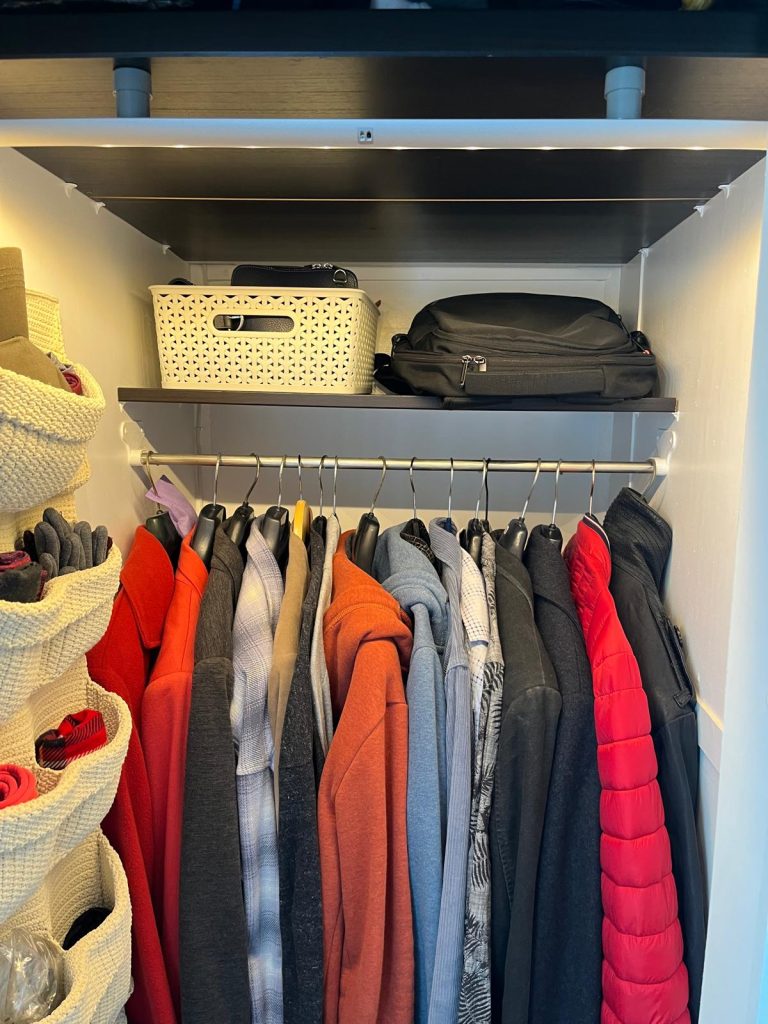
Next, add occasion clothes, seasonal items and anything you only wear a few times a year.
If you’re not sure where to store seasonal clothing or when to rotate it, read my guide on seasonal wardrobe organization.
They still need a home, but they don’t need the most accessible part of your closet.
The more your closet reflects what you actually wear, the easier it becomes to get dressed, put clean clothes away and keep everything organized.
Separate Clothes That Still Need a Decision
As you’re putting clothes back into your closet, you’ll probably come across a few that make you stop.
A top you keep trying on but never wear.
Jeans you hope will fit again.
A sweater you haven’t worn for months, but can’t quite let go of.
Instead of putting those clothes back with the ones you wear every week, keep them together in one separate place.
That could be one section of your closet, a shelf or a storage box.
The goal isn’t to decide about every item today.
The goal is to stop those clothes taking up space alongside the ones you rely on every day.
Once your everyday clothes are back in the closet, you’ll have a much clearer picture of how much space you really have and which clothes still need your attention.
When you’re ready, you can come back to that one group of clothes and make those decisions without interrupting your everyday routine.
Make Your Closet Easy to Maintain
Before you finish organizing your closet, think about what will happen once you start using it again.
What will you do with the sweater you’ll wear again tomorrow?
How easy will it be to put clean laundry away?
Will you be able to hang clothes back up without moving other things first?
If any of those questions are difficult to answer, your closet probably still needs a few adjustments.
You might need a little more hanging space.
You might need to move seasonal clothes somewhere less accessible.
Or you might need to leave a little extra space so putting clothes away feels quick instead of frustrating.
The easier it is to put clothes back where they belong, the easier it is to keep your closet organized.
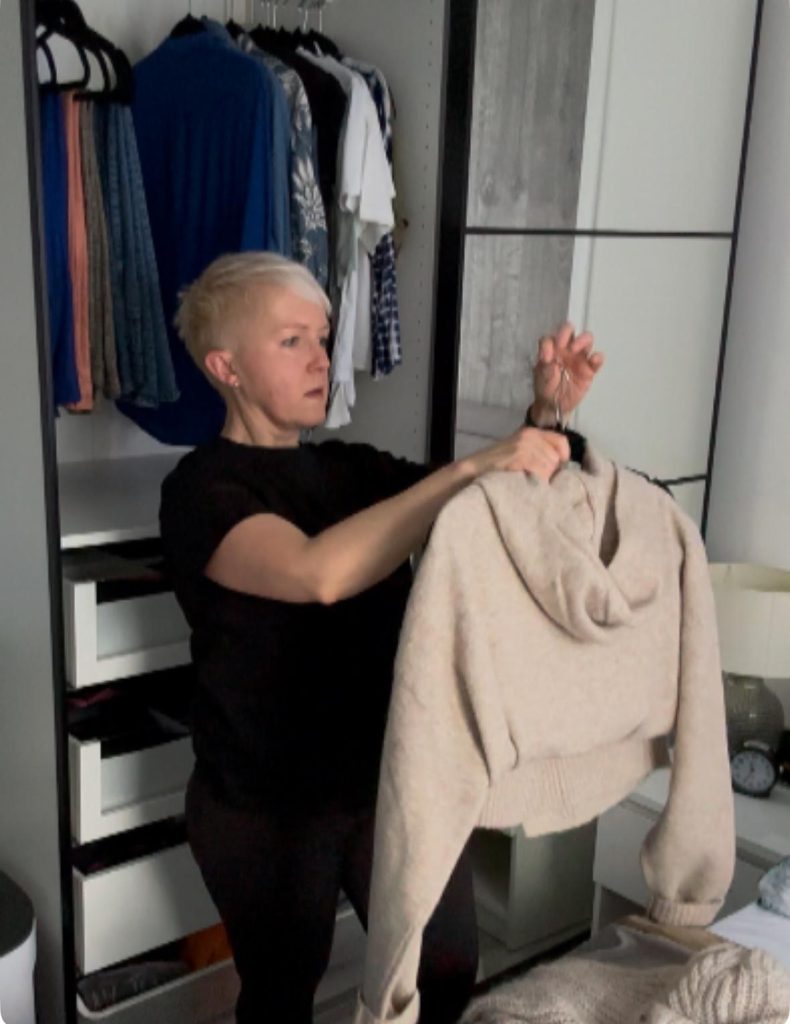
A well-organized closet shouldn’t just look good when you’ve finished.
It should still work just as well on a busy Tuesday morning.
Once you’ve organized your closet around how you actually use your clothes, a few well-chosen storage products can help maintain that setup. Here are my must-haves to organize your wardrobe.
What to Do If Your Closet Starts Feeling Full Again
If your closet starts feeling full again a few months from now, don’t assume you need to start over.
Instead, look at what’s changed.
Are your everyday clothes becoming harder to reach?
Have clothes you’re still unsure about slowly found their way back into your everyday closet?
Are worn-once clothes ending up on a chair again?
Is clean laundry staying in the basket because putting it away feels like too much effort?
Those are all signs that something in your setup needs adjusting.
Most closets don’t stop working overnight.
They slowly drift away from the way you actually use them.
The sooner you notice those small changes, the easier they are to fix.
When your everyday clothes have the best space, unfinished decisions stop getting in the way and you’ve planned for what happens between wearing and storing your clothes, keeping your closet organized becomes much more manageable.
The goal isn’t to create a picture-perfect closet.
It’s to create one that still works on an ordinary Tuesday morning.
Because a closet that works with your everyday life is much easier to keep organized than one that’s only organized for storage.
Frequently Asked Questions About Organizing Paperwork
If you’re wondering how to organize a small closet with lots of clothes, start by separating your everyday clothes from everything else. Give the clothes you wear most often the easiest-to-reach space, keep clothes you’re still deciding about in one separate section and think about what happens to clothes between wearing and storing them. A small closet works best when it’s organized around your everyday routine, not simply around clothing categories.
The easiest way to create more usable space isn’t always by buying more storage products. First, move seasonal clothes, occasion wear and clothes you’re unsure about away from your everyday clothing. When your most-used clothes aren’t competing with everything else, your closet becomes much easier to use. If there’s still not enough room after reorganizing, you may simply have more clothes than the space can comfortably hold.
You shouldn’t need to reorganize your closet every few weeks. If your setup reflects how you actually use your clothes, small adjustments are usually enough. If you notice your everyday clothes becoming harder to reach, worn-once clothes gathering around the house or clean laundry staying in the basket, treat those as signs that your closet needs a small adjustment rather than a complete reset.
Don’t let those clothes compete with the ones you wear every week. Instead, keep them together in one clearly defined section of your closet or in a separate storage box while you decide what to do with them. This makes your everyday closet easier to use without forcing you to make difficult decisions before you’re ready.
Clothes you’ve worn once often don’t have an obvious place to go. Instead of leaving them on a chair or at the end of the bed, decide where they’ll live before you finish organizing your closet. The best solution is one you’ll actually use every day. When clothes in transition have a place to go, they’re much less likely to spread into other areas of your home.
Related Articles
Seasonal Wardrobe Organization – Simple Steps for Busy Women
Learn how to store seasonal clothes without letting them take over your everyday closet.
Best Way to Organize Your Closet Clothes: Busy Women Tips
Discover practical ways to organize your clothes so getting dressed feels quicker and less stressful.
3 Must-Haves to Organize Your Wardrobe – Simple Tips for Busy Women
See which simple storage solutions can support a closet that’s already organized around your everyday routine.
Does your closet keep becoming difficult to use again?
If you’ve organized your closet before but somehow it always ends up feeling full again, the amount of clothes may not be the real problem.
My free guide Why It Keeps Coming Back will help you understand why the same things keep returning and what to look at first.
Meet Ela
Hi, I’m Ela, the home organizer behind Organise with EL. I help busy women create homes that are easier to manage in everyday life.
I’ve found that spaces like kitchen counters, paperwork piles and overflowing wardrobes usually aren’t just tidying problems.
They’re usually signs that the space isn’t supporting the way you use it every day.
That’s why I help women understand what’s really causing the problem and make changes that work in everyday life.