
You clear the kitchen counter at the end of the day.
The mugs are away. The post has been dealt with. The shopping has been put away. For a little while, the kitchen feels calmer.
Then the next day starts.
Someone makes a coffee and leaves the cup by the kettle. The post comes through the door and lands on the counter. A bag gets put down just for now. Something that needs to go upstairs gets left there until later.
By the afternoon, the counter is starting to look much the same as it did before you cleared it.
If this keeps happening in your kitchen, it’s worth paying attention to.
Because the answer usually isn’t more tidying.
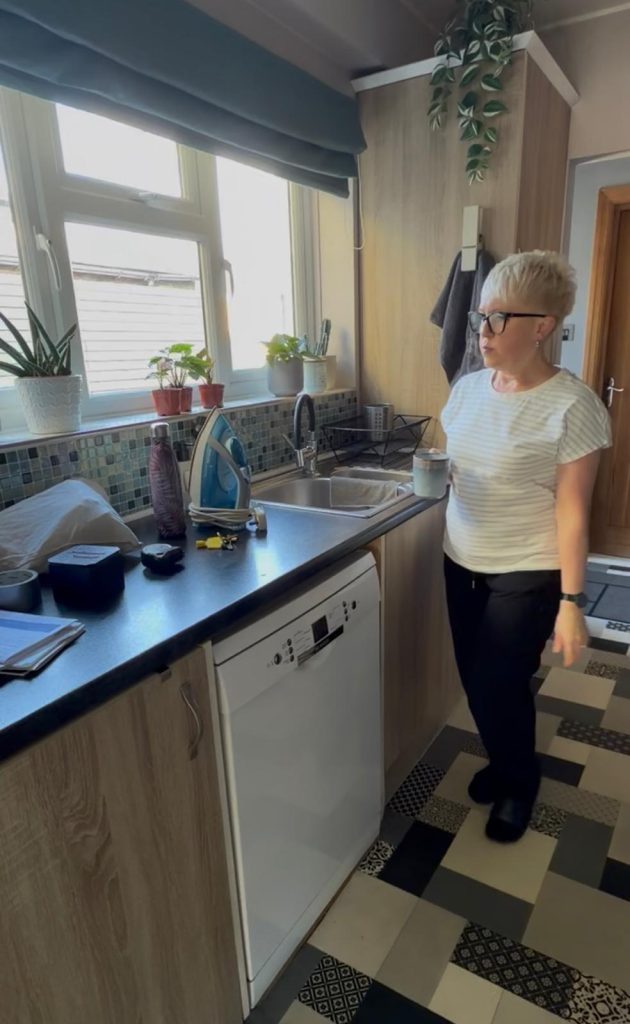
The real reason tidying doesn’t stick
Most advice about kitchen counters focuses on the clearing. Load the dishwasher. Put things away. Wipe the surfaces down.
And yes, those things matter.
But if you’re clearing the same counter over and over again and it keeps filling back up, the tidying itself probably isn’t the problem.
The counter is showing you something.
And until you understand what it’s showing you, you’ll keep finding yourself back in the same place a day or two later.
Why more tidying often doesn’t solve it
This is where a lot of people get stuck. They clear the counter, it fills back up and they assume the answer is to be more consistent. More disciplined. Better at keeping on top of it.
But if the same categories of things keep returning – the post, the bags, the things waiting to go somewhere else – more tidying just means managing the same problem more often. You’re dealing with the symptom, not the reason it keeps appearing.
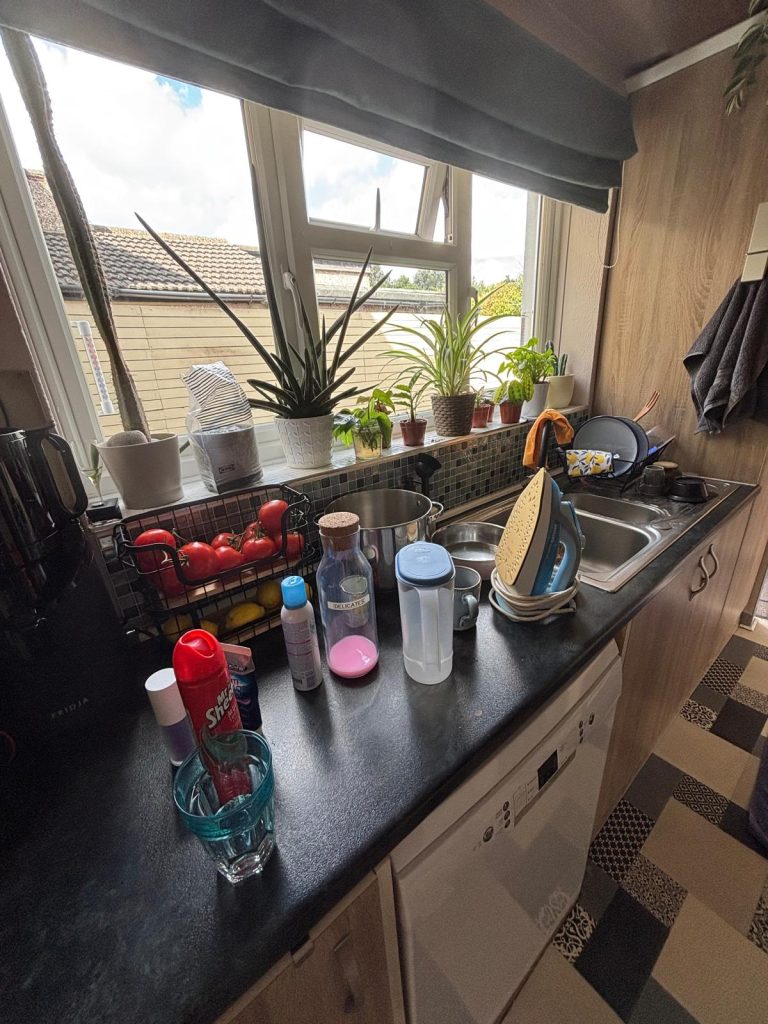
If keeping your kitchen counters clear requires constant tidying, that’s usually a sign the setup is working against you rather than supporting you.
The items are still arriving for the same reasons they always did. The counter is still filling the same gaps. Until something changes about why things land there, clearing it is just a temporary fix.
That’s not a discipline problem. It’s a setup problem.
Why kitchen counters attract clutter more than anywhere else
The kitchen is the busiest room in most homes. Food gets prepared there, drinks get made, shopping gets unpacked, school bags get dropped, post lands, phones charge, medication sits out because someone needs to remember it. It happens several times a day, every day, with multiple people moving through the same space.
With so much happening in one room, it’s not surprising that things start landing on the counter. It’s often the nearest surface, the easiest option and the one everyone uses without thinking.
It’s the easiest place to put something down.
When you come in tired with shopping bags, the post, your handbag and three other things on your mind, you’re not thinking about where everything should go. You put it down wherever is easiest, and the counter is usually right there.
One item gives the next one permission.
This is something I’ve noticed again and again. When a counter is completely clear, people are often more careful about what they leave there. But once one thing appears, it becomes much easier to add something else next to it.
A bag gets put down. Then the post lands there, a water bottle, something that needs to go upstairs.
None of those things seem like a big deal on their own. But before long, the counter is holding all sorts of things that were only meant to be there temporarily.
It rarely happens all at once. It’s usually lots of small “I’ll leave it here for now” decisions that build up over time.
A lot of what lands on the counter is an unfinished decision.
Look at what’s actually sitting on most kitchen counters and you’ll often find post that needs dealing with, something waiting to go back to a shop, things someone meant to take upstairs, medication, school letters, reusable bags or random bits that don’t really belong in the kitchen at all.
Most of these things aren’t there because somebody decided the counter was the best place for them. They’re there because nobody has quite worked out what to do with them yet.
The counter becomes the place where things wait. Things waiting to be dealt with, waiting to be put away, waiting for a decision.
The problem is that “waiting” can easily turn into days or even weeks, especially when life is busy.
The counter is often doing a job that nothing else in the home is doing.
This is the part that often gets missed.
If the same things keep ending up on the counter – post, bags, school paperwork, things that need to go upstairs – it’s usually because there’s nowhere easier for them to go.
The cupboard nearby might be too full. There might not be a sensible place for bags near the door. The paperwork arrives, but nobody is quite sure where it should go next.
So it ends up on the counter.
The counter becomes the place that catches everything that doesn’t have an obvious home. And you can clear it as many times as you like, but if those things still don’t have somewhere better to go, they’ll keep finding their way back.
Why the same things keep ending up there
When you look at what’s sitting on the counter, it’s often not random clutter.
It’s usually the same types of things appearing again and again.
The post comes in and stops there.
The shopping gets unpacked, but the reusable bags stay behind.
Something needs to go upstairs, but nobody takes it.
A school letter arrives and waits for someone to deal with it.
The counter becomes the place where things stop moving.
That’s why simply clearing it doesn’t always work. You can remove the items, but if nothing changes about where they’re supposed to go next, they’ll keep finding their way back.
Sometimes a basket or organiser helps because it gives those things a more suitable place to land. But before deciding what storage might help, it’s worth paying attention to the journey those items are taking through your home.
Where are they coming from?
Where are they supposed to go next?
And what’s stopping them from getting there?
What this looks like in real life
If clearing the counter isn’t enough, the next question becomes: what should you actually look at instead?
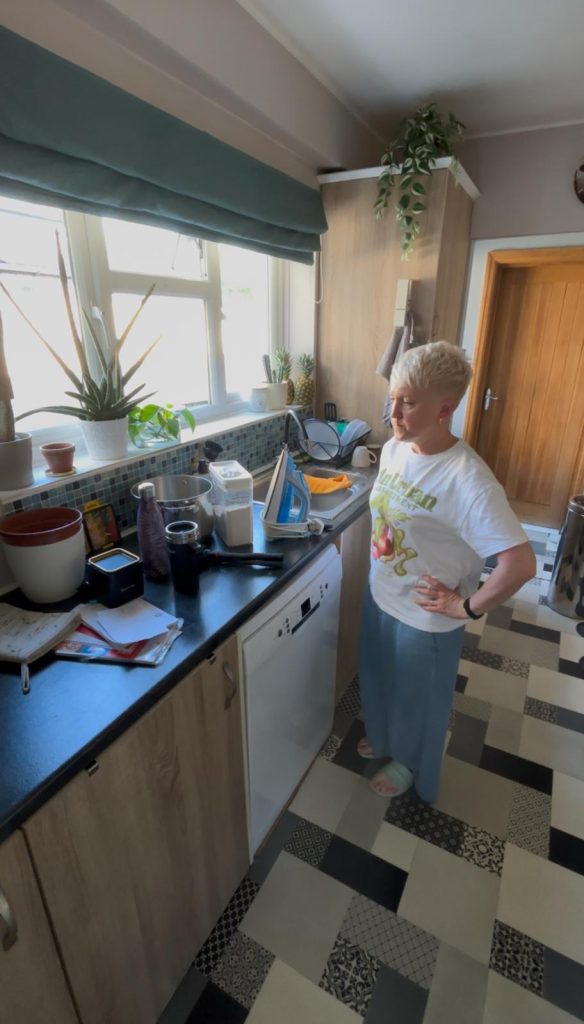
Kitchen counter clutter looks different in every home, but the pattern underneath it is often very similar.
One kitchen counter fills up with reusable bags. Not because the family is untidy, but because there’s nowhere convenient to keep them near the door. The bags come in with the shopping, get unpacked, and then stay on the counter because that’s the easiest place to leave them.
Another counter collects post every single day. Not because nobody cares about it, but because nobody is quite sure what to do with it next. It gets put down while someone decides, and the decision keeps getting pushed back.
Another becomes the home for things waiting to go upstairs. A phone charger. A library book. Something a child left in the kitchen. Nobody takes them because nobody is going upstairs right now, and the counter is right there.
In each case, the counter looks like the problem. But when you look a bit closer, it’s usually showing you something else. Things are arriving, but they’re not moving on. They get stuck there because there’s no obvious next step.
So what actually helps?
If you keep clearing the counter and the same things keep coming back, I’d start by paying attention to what those things are.
Not what’s sitting there today, but what keeps reappearing a day or two after you’ve cleared it.
Is it always post?
Reusable bags?
Things waiting to go upstairs?
School letters?
The things that keep coming back are usually telling you where the real problem is.
Once you’ve spotted the pattern, start asking why those items are ending up there.
Do they actually have somewhere sensible to go?
Is that place easy enough to use in real life?
Or is the counter simply the easiest option?
It’s also worth looking at the things that live on the counter all the time. Some things genuinely need to be there. But sometimes the counter ends up holding far more than it needs to, which makes it harder to keep on top of.
And pay attention to the “for now” items.
The post that arrived on Monday.
The bag from the shopping.
The thing someone meant to take upstairs.
Those are often the things that quietly build up over time. They were only meant to be there temporarily, but temporary can easily turn into a week when life gets busy.
What this means in practice
The next time your kitchen counter fills up, try looking at it differently.
Instead of seeing a pile of things that need tidying, look at what has actually ended up there.
What’s been sitting there for days?
What keeps coming back?
What seems to arrive but never quite makes it to its next destination?
The answers often tell you far more than the clutter itself.
Because most kitchen counter clutter isn’t random. It’s usually the same items, the same unfinished decisions and the same patterns showing up again and again.
Once you start noticing those patterns, it becomes much easier to see what actually needs attention.
Related Kitchen Articles
If you’re struggling with other kitchen areas too, these articles might help:
- How to Organize Small Kitchen: Organization Ideas for Maximum Efficiency
- 10 Easy Solutions for Clutter-Free Kitchen Cabinets
Do the same things keep coming back?
If you’ve ever cleared a space only to watch the same things slowly return, you’re not dealing with a kitchen counter problem. You’re dealing with a pattern.
My free guide Why It Keeps Coming Back will help you understand why the same things keep returning and what to look at first.
About Organise with EL
Hi, I’m Ela,
I help busy women create homes that are easier to manage in real life through decluttering and home organisation.
I’ve found that spaces like kitchen counters, paperwork piles and overflowing wardrobes often aren’t just tidying problems. They’re usually signs that something about the setup isn’t working for everyday life.
That’s why I focus on helping women understand what’s causing the problem and create spaces that work better for real life.
Need help with one frustrating space? Learn more about the Clutter Reset Hour →
One Comment